
Project Overview
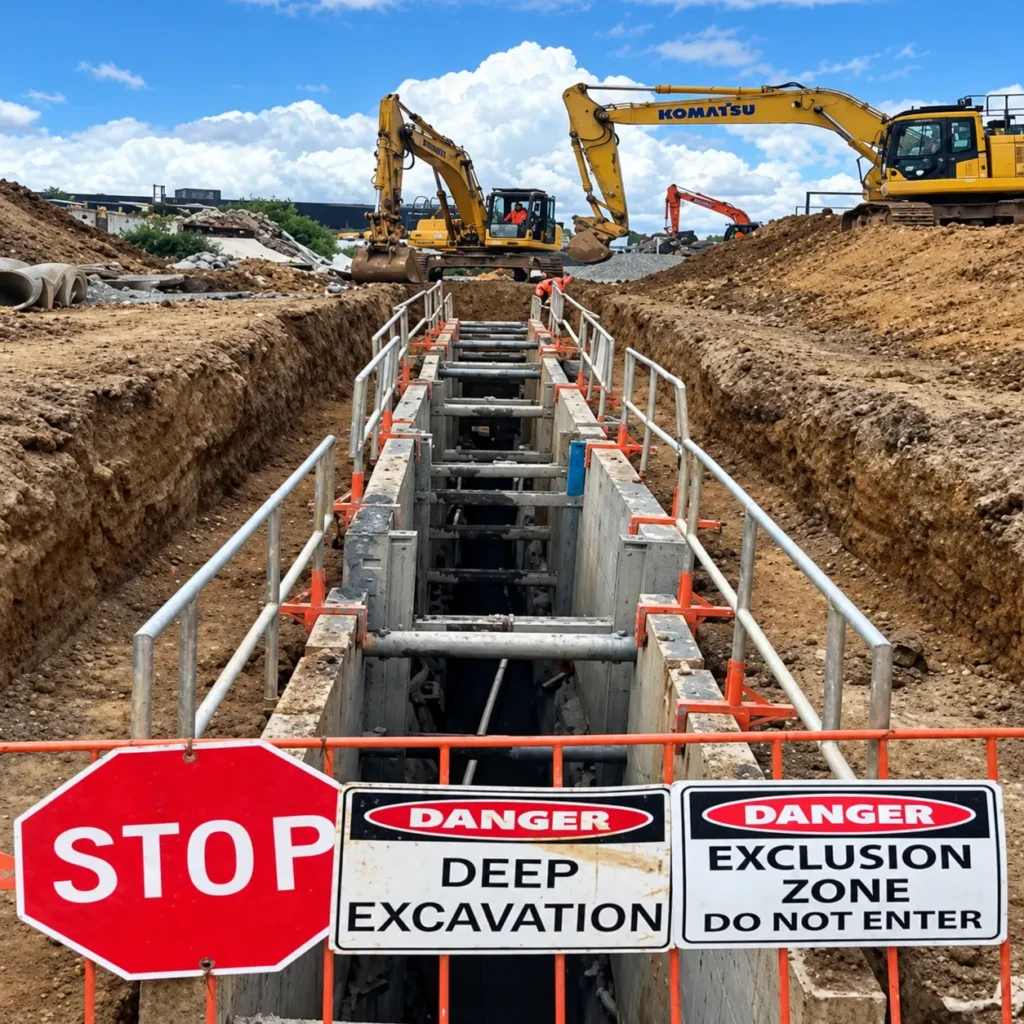
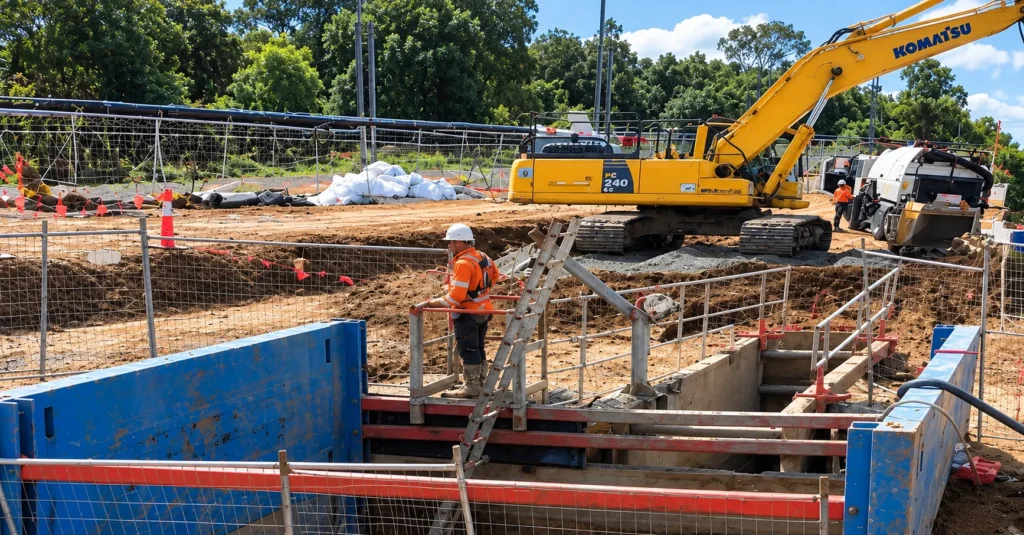
RA Smith Contracting delivered the Cabramatta Loop sewer diversion for Fulton Hogan on the ARTC Cabramatta Loop Project. The team realigned a gravity sewer carrier and a pressure main to make room for new rail infrastructure. RA Smith also handled all the Sydney Water works on the $1.8 million job.
Site work took place from November 2022 to July 2023. The job included 320m of DN450 gravity sewer and 520m of DN375 pressure main. Sewer diversions like this are part of our sewer construction services.
ARTC's Cabramatta Loop lets freight trains pass each other on the Southern Sydney Freight Line.
November 2022 to July 2023
The Challenge
The diversion tied into live Sydney Water sewers. Every connection ran under Sydney Water's Flow Isolation and Flow Management (FIFM) procedures. At CH 00 and CH 320 the team found concrete foundations supporting the 375 and 400 VC mains.
An unexpected challenge arose on the pressure main. The DN375 CICL main was concrete encased at the CH 00 connection point. The design documents did not show it. During the FIFM isolation, the main also could not be drained or scoured for the connection.
At CH 13 the foundation layer did not meet Sydney Water requirements. The ground along the gravity sewer was water charged. Commencement was delayed, and the design changed several times before start.
The Solution
Each problem got its own method, proposed to Fulton Hogan or Sydney Water. Sequencing changed as conditions did.
Live gravity connections. At CH 00 and CH 320 the crew removed the concrete foundations. They fitted DN300 and DN375 GRP rocker pipes to the mains, so two DN1200 manholes could go over them. A bypass diverted the flows during the FIFM connections. The method changed on the day, and the work finished over two consecutive days.
Foundation remediation. RA Smith worked with its geotechnical engineer on a remediation procedure that was constructable and cost effective. The team laid the DN450 PP pipe on treated foundation from CH 13 to CH 150, including the three DN1200 manholes.
Encasement removal. RA Smith proposed a removal method to Sydney Water. Sydney Water allowed the work during its trial isolation of the pump station and the DN375 main. The crew removed 5m of encasement by hand and kept the main intact.
Draining the main. The isolation showed the main could not be drained or scoured. An approved Sydney Water contractor fitted a 375 x 100 hot tap. RA Smith installed a scour line into the gravity manhole.
Project Outcome
RA Smith completed the gravity and pressure sewer diversions despite extended commencement delays and multiple design changes before start.
On the Cabramatta Loop sewer diversion, RA Smith worked out a method for each issue as it came up on site. The pressure main went in ahead of schedule once the gravity main was done. Our Integrated Management System is third party accredited to AS/NZS ISO 9001:2015, ISO 45001:2018 and ISO 14001:2015.
Technical Scope
FAQs
RA Smith realigned an existing gravity sewer carrier and pressure main for Fulton Hogan on the ARTC Cabramatta Loop Project, installing 320m of DN450 gravity sewer and 520m of DN375 pressure main.
The existing DN375 CICL main was concrete encased at the CH 00 connection point, and the design documents did not show it. RA Smith proposed a removal method to Sydney Water, then removed 5m of encasement by hand during a trial isolation.
The existing main could not be drained or scoured during the FIFM isolation, so an approved Sydney Water contractor installed a 375 x 100 hot tap. RA Smith added a scour line into the existing gravity manhole.
The existing foundation at CH 13 did not meet Sydney Water requirements. RA Smith and its geotechnical engineer proposed a remediation procedure to Fulton Hogan, and the DN450 PP pipe went in with foundation treatment from CH 13 to CH 150.
At CH 00 and CH 320, RA Smith installed DN300 and DN375 GRP rocker pipes on the existing mains under a Sydney Water FIFM bypass, built two DN1200 manholes over them and made concurrent connections while the bypass diverted existing flows.