
Project Overview
RA Smith Contracting delivered the Inland Rail utility relocations for ARTC at Junee and Forbes in NSW. RA Smith was Principal Contractor on the $4.3 million contract. The team diverted and realigned existing water, sewer and gas infrastructure so new rail assets could be built.
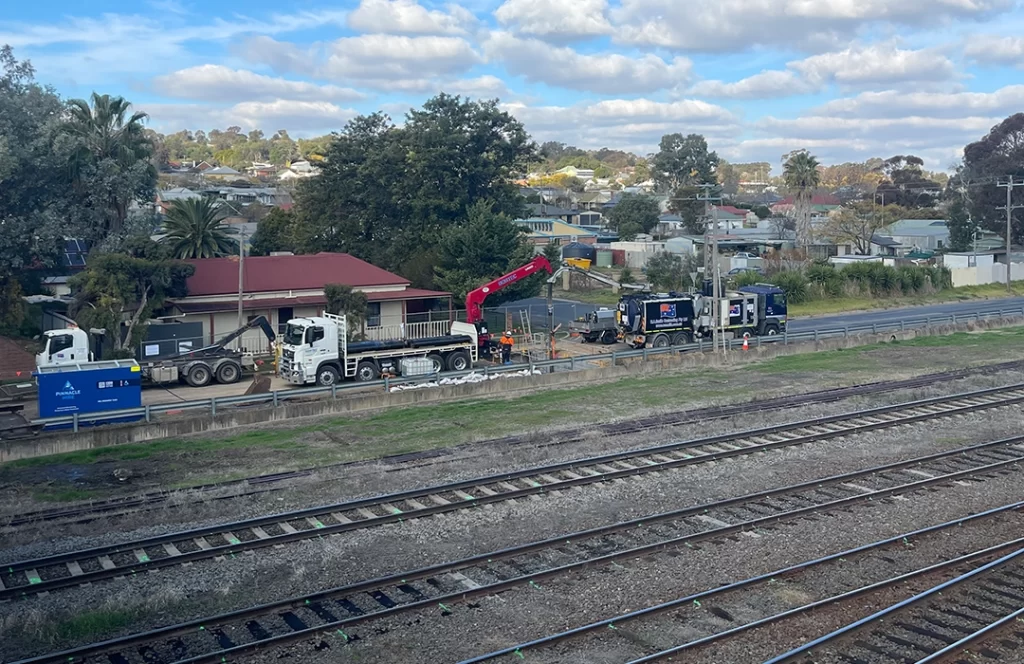
Work included installation beneath a live rail corridor and across the Olympic Highway, from March 2023 to September 2024. Projects like this are part of our water construction services and sewer construction services.
The relocations cleared the way for rail construction at Junee and Forbes, part of the wider Inland Rail program.
March 2023 – September 2024
The Challenge
The work meant installing water, sewer and gas infrastructure beneath a live rail corridor and across the Olympic Highway. Safe work with minimal disruption took careful planning and close coordination with multiple stakeholders.
The Olympic Highway crossing was by open cut, which needed a full road closure and an approved traffic detour. The highway carries heavy vehicles, so the crossing needed extensive approvals and coordination with Council and the traffic authorities.
Significant groundwater came in while the bore shafts were excavated. Commencement was also delayed, and the design went through multiple revisions before start. Both could affect sequencing and program on the Inland Rail utility relocations.
The Solution
Each constraint got its own method, and sequencing was reviewed as conditions changed.
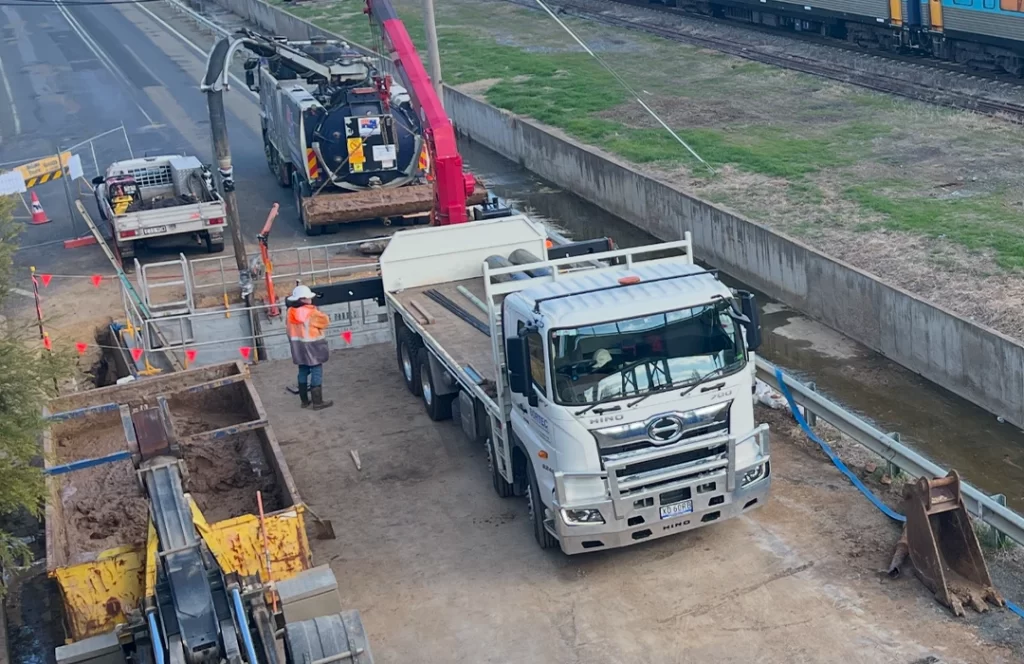
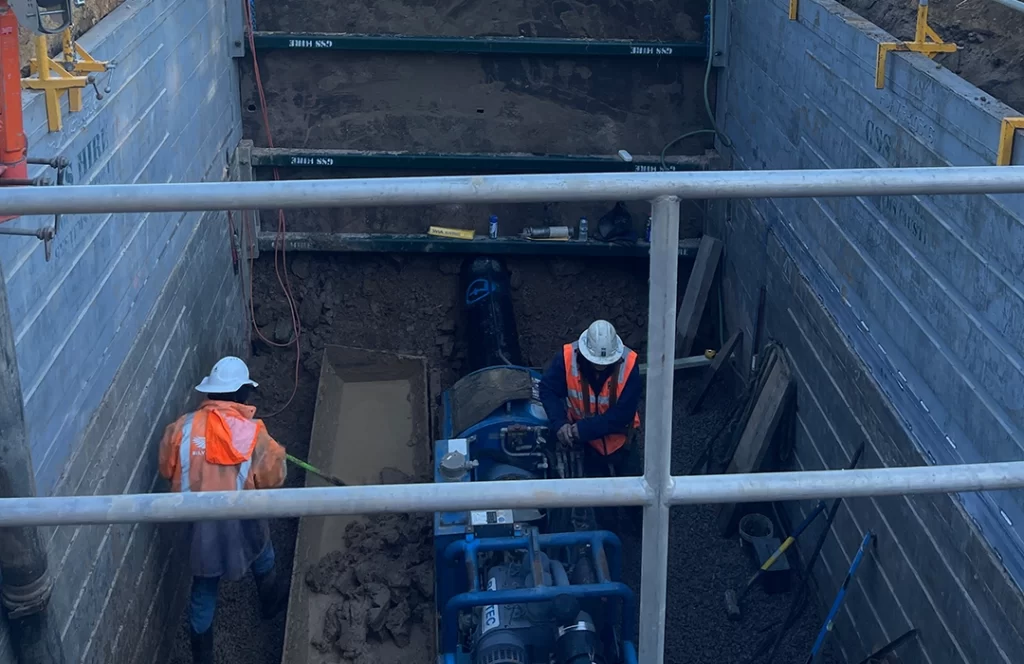
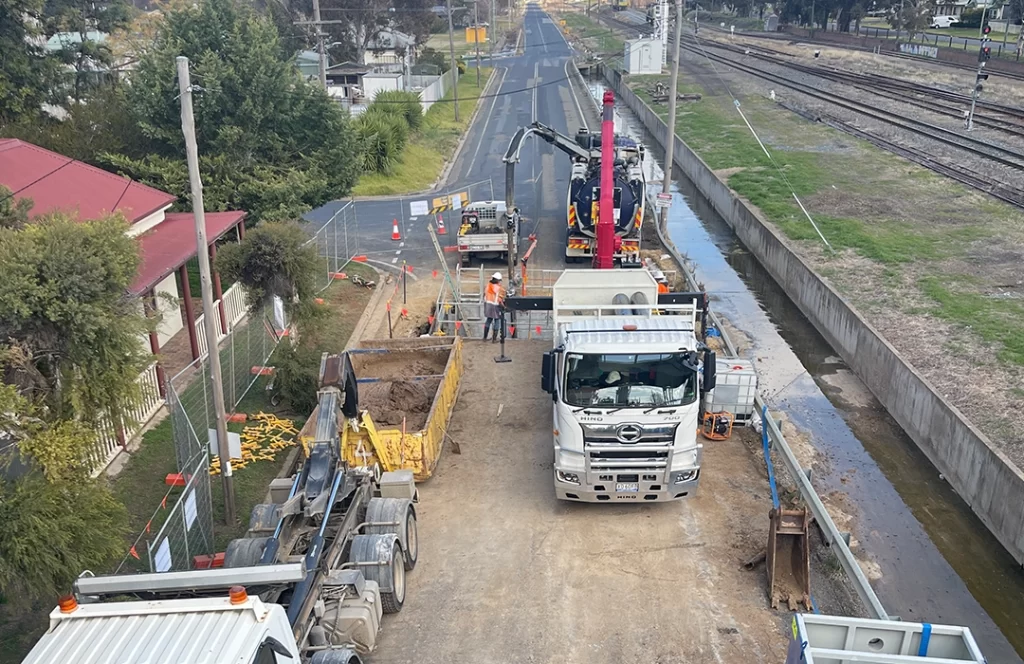
Groundwater control. Sediment tanks at the bore locations let pumping run continuously without slowing boring. Vacuum tankers took the extracted water to a licensed treatment facility, in line with environmental requirements.
Olympic Highway crossing. We worked with Council and the traffic authorities to secure approvals. We then installed 62m of DN375 DICL water main by open cut under the closure and detour, with full pavement reinstatement.
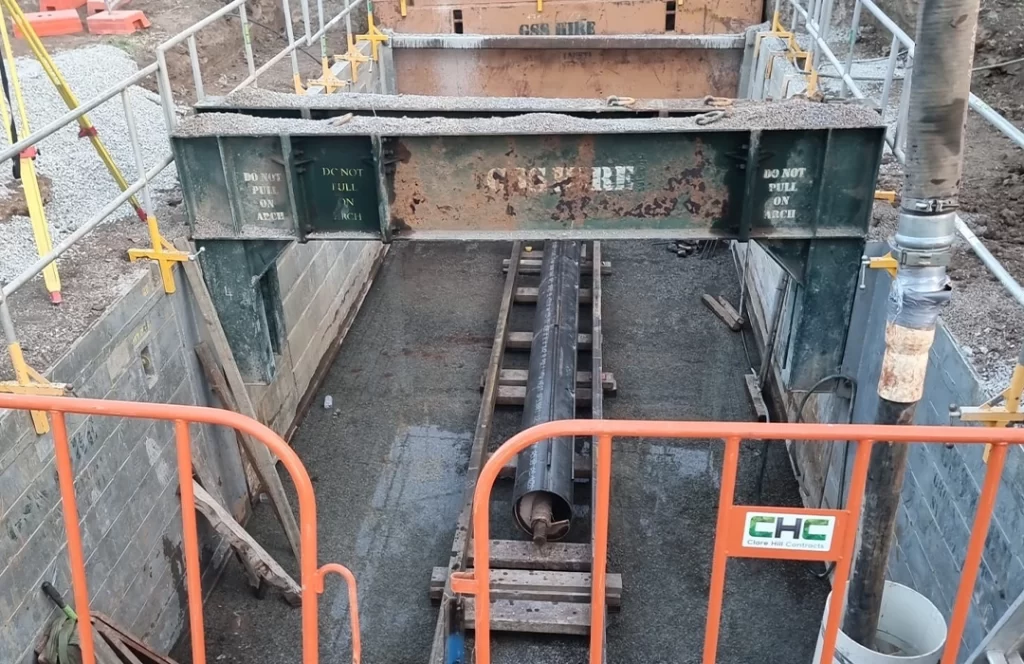
Live rail interface. The crew bored the 88m DN375 MSCL water main inside a DN600 steel casing with a minimum 2.5m cover. They also completed an 82m gas bore beneath the railway corridor.
Design and program changes. RA Smith reviewed methods and sequencing as design revisions, groundwater and stakeholder requirements changed, which kept the work moving.
Project Outcome
RA Smith completed the potable water, gravity sewer and gas relocations despite delayed commencement and design revisions before start.
RA Smith delivered the Inland Rail utility relocations safely and in line with ARTC's project objectives. The highway crossing went ahead under a full closure. Our Integrated Management System is third party accredited to AS/NZS ISO 9001:2015, ISO 45001:2018 and ISO 14001:2015.
ARTC Inland Rail Case Study
PDF · Full technical scope
Technical Scope
FAQs
RA Smith relocated potable water, gravity sewer and gas infrastructure for ARTC as Principal Contractor, including an 88m DN375 MSCL water main bored beneath a live rail corridor, 45m of DN225 PVC sewer by microtunnelling and an 82m gas bore.
Sediment tanks at the bore locations let pumping continue without slowing boring, and vacuum tankers took the extracted water to a licensed treatment facility.
RA Smith installed 62m of DN375 DICL water main by open cut across the highway under a full road closure and an approved traffic detour. RA Smith secured approvals from Council and the traffic authorities first, then reinstated the pavement in full.
The water main bore used a 4.5m deep launch shaft and a 3.5m deep receive shaft. The sewer microtunnel used a 4.5m deep launch shaft and a 2.5m deep receive shaft.
The 88m DN375 MSCL water main was bored inside a DN600 steel casing with a minimum 2.5m cover beneath the live rail corridor.